

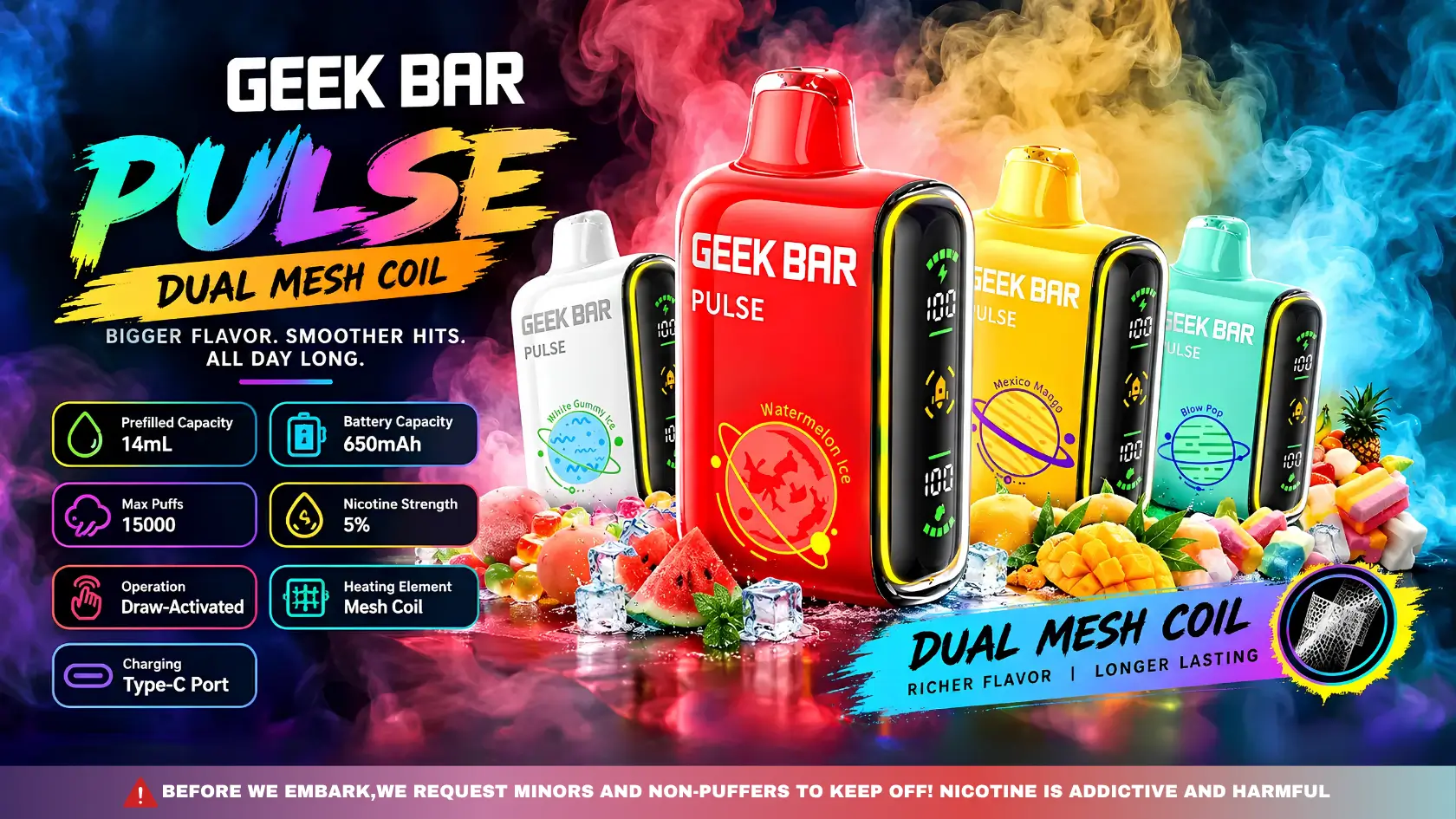
The Geek Bar Pulse dual mesh coil is the heating element behind almost every current Geek Bar Pulse device, and it's the main reason these disposables hit harder and taste cleaner than older single-coil models. Instead of one strip of heated metal, you get two working together — more surface area, more even heat, and a noticeably smoother draw from the first puff to the last.
This guide breaks down exactly how the coil works, what it means for your Geek Bar Pulse puff count, and how it connects to everything else the device does — battery life, screen readouts, and troubleshooting when something feels off. If you're new to the Pulse lineup entirely, our Geek Bar Guide is the best starting point before diving into coil specifics.
📋 Table of Contents
The Geek Bar Pulse dual mesh coil is a heating element built from two parallel mesh strips instead of one. Both strips fire together every time you draw, splitting the heating load and vaporizing e-liquid across a wider surface.
Most Pulse-series devices run this coil at a fixed resistance around 0.6Ω, which sits on the lower end of the disposable category. Lower resistance at the same voltage pulls more current, and more current across two mesh strips means steadier heat than a single strip could manage on its own.
It's not a gimmick feature. The dual-coil setup is the actual hardware reason Pulse devices can post puff ratings as high as 25K, 50K, or higher without the flavor collapsing halfway through the tank.
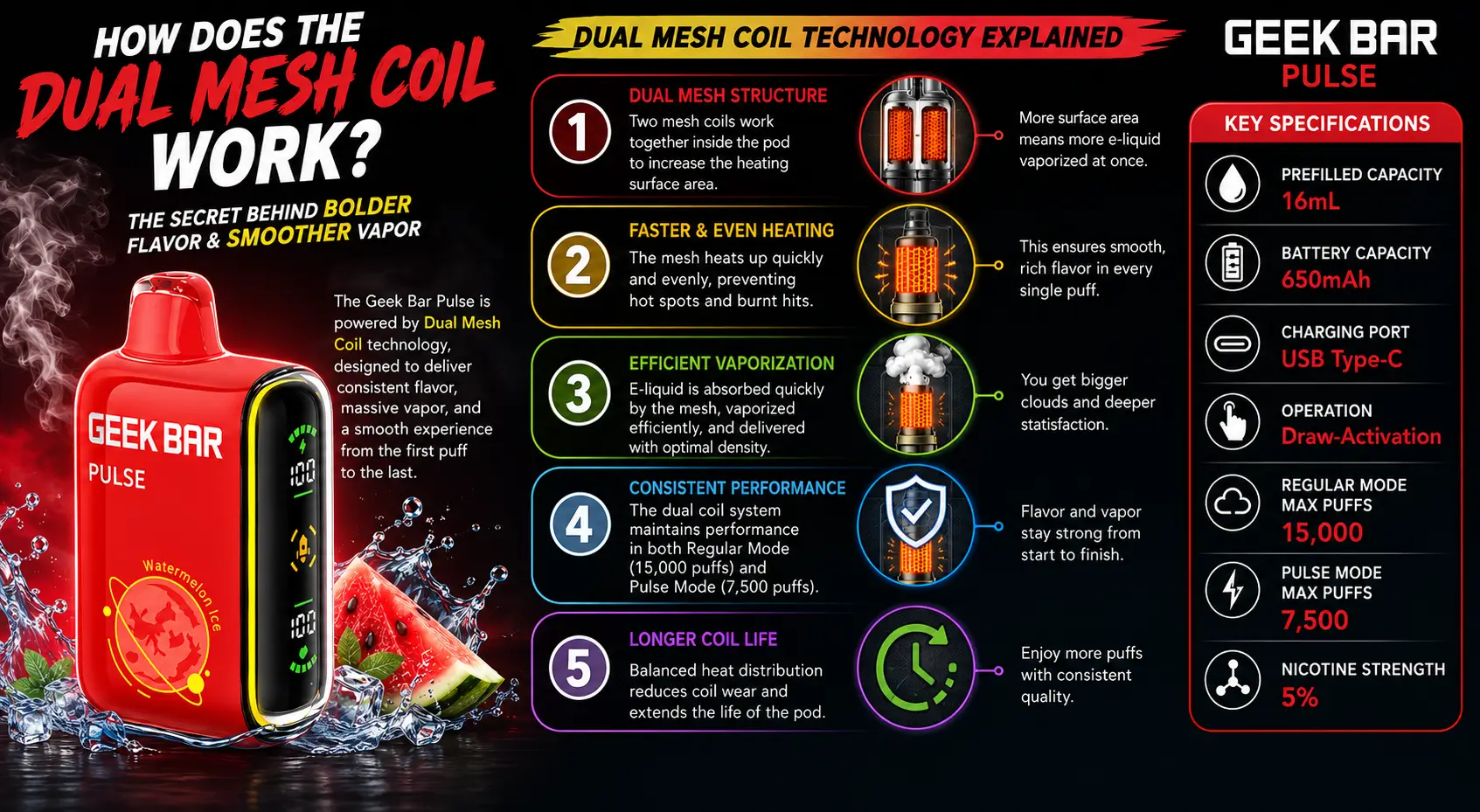
When you inhale, the battery sends current through both mesh strips at once. E-liquid wicks up through the cotton, hits the heated mesh, and vaporizes almost instantly — no ramp-up delay, no cold first puff.
Picture two griddles cooking the same meal side by side instead of one small pan doing all the work. Heat spreads evenly across both surfaces, so you're not getting a scorched edge and a cold center — the classic complaint with older single-wire coils.
Because the mesh design maximizes contact between metal and e-liquid, more juice gets vaporized per draw without needing extreme heat. That's the mechanism — not marketing language, just more surface area doing the same job more efficiently.
This even heat distribution also protects flavor consistency near the end of the tank, when single coils typically start tasting burnt or muted. A dual mesh coil doesn't eliminate that drop-off entirely, but it noticeably delays it.
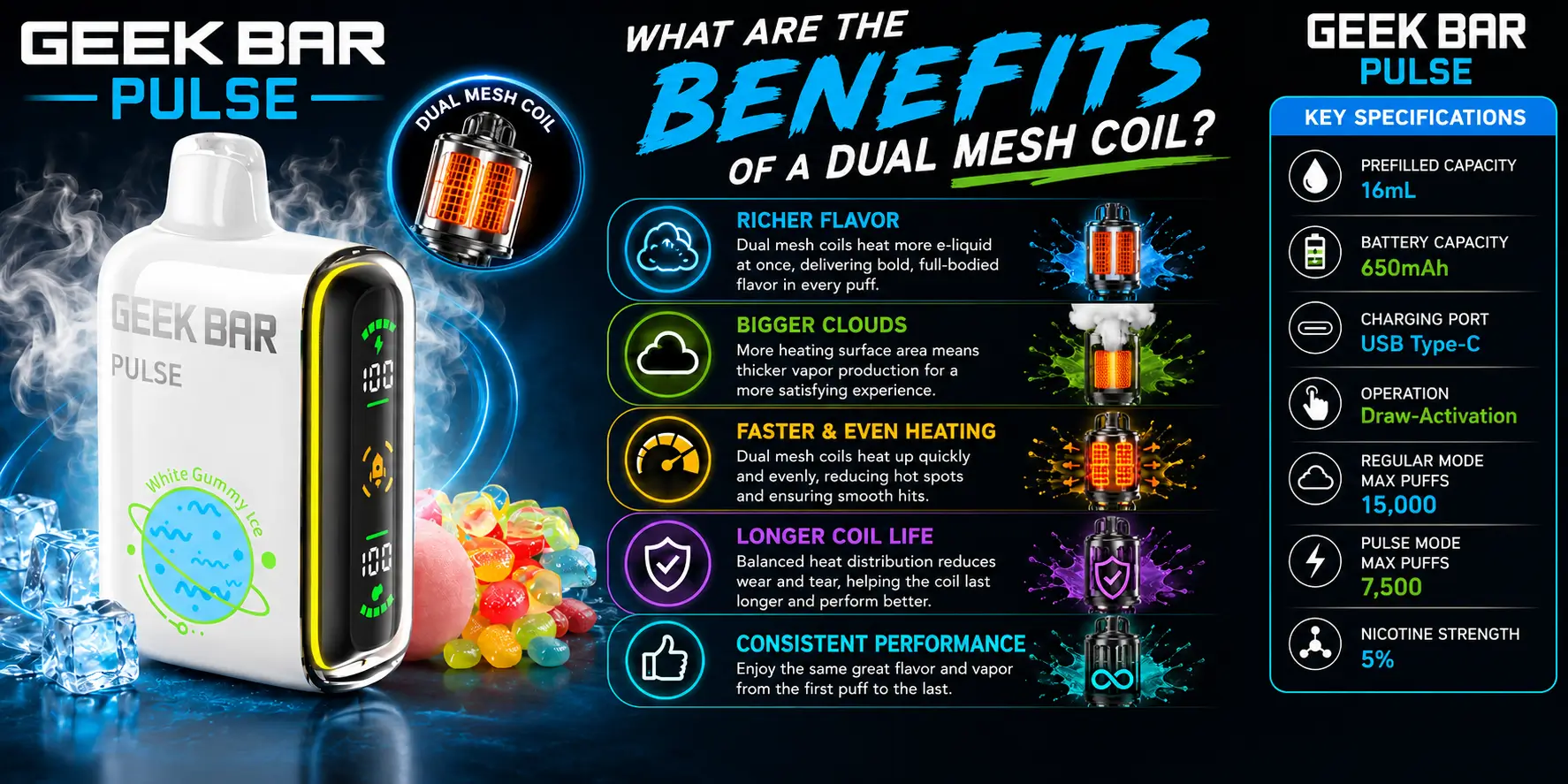
The short version: bigger clouds, truer flavor, and a longer window before performance drops off. Here's what each benefit actually looks like in daily use.
The trade-off is real too: dual mesh coils need more power to run both strips, which is part of why Pulse Mode settings drain e-liquid faster than Regular Mode on the same device.
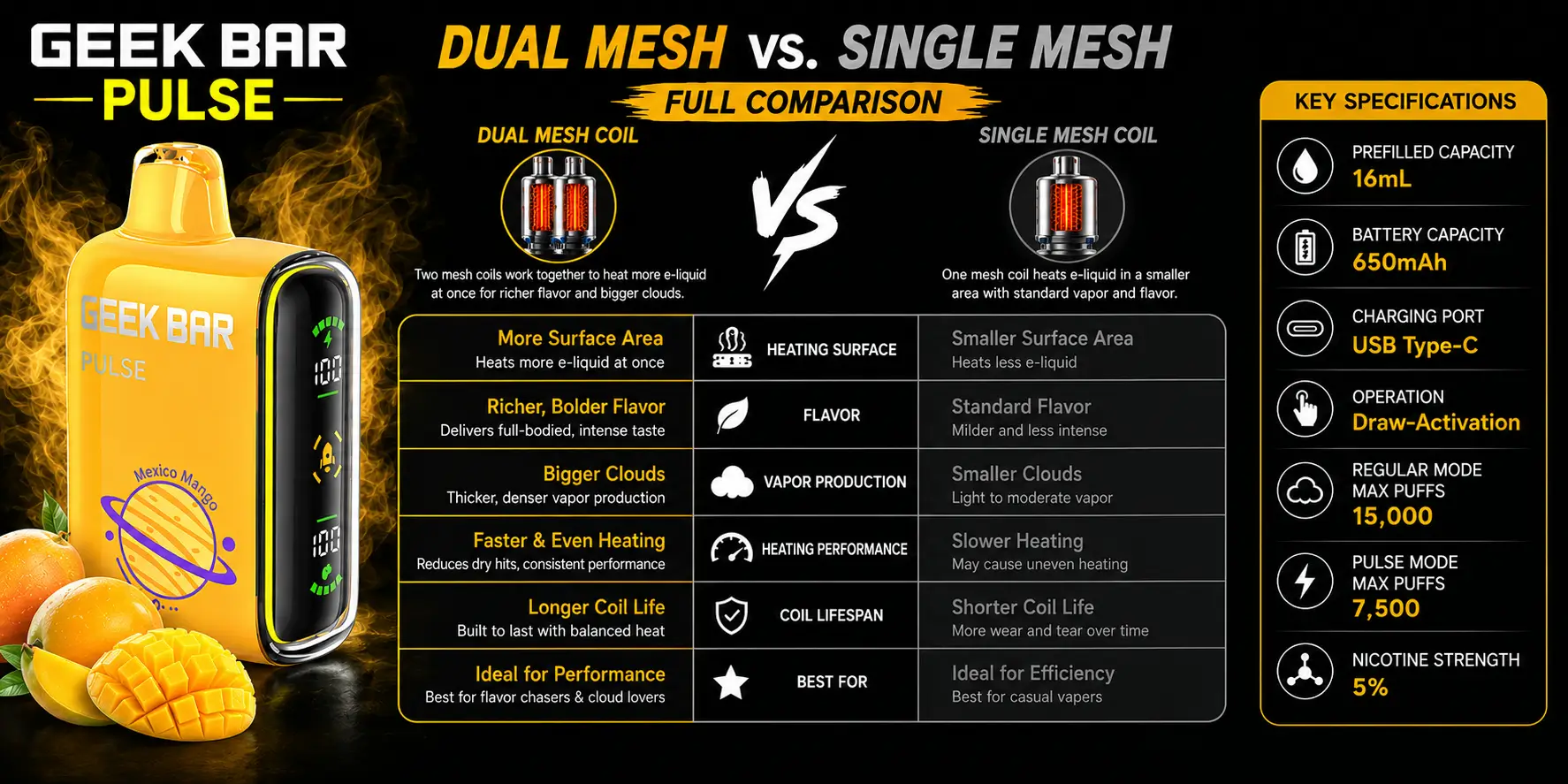
Here's how the two coil types stack up side by side, based on how each performs across a full disposable tank rather than just the first few puffs.
| Factor | Dual Mesh Coil | Single Mesh Coil |
|---|---|---|
| Heating Surface | Two mesh strips firing together | One mesh strip |
| Flavor Accuracy | Richer, more consistent | Good, fades faster late in tank |
| Vapor Density | Denser clouds per draw | Standard clouds |
| Power Draw | Higher — needs more battery output | Lower, more battery-efficient |
| Burnt-Hit Risk | Low — even heat spread | Moderate near empty tank |
| Best For | High-capacity disposables, flavor chasers | Compact, lower-puff devices |
Across the current Geek Bar Pulse lineup, the dual mesh coil pairs with a consistent set of hardware. Here's the spec sheet as it typically appears on Pulse-series devices:
| Spec | Details |
|---|---|
| Coil Type | Dual Mesh, ~0.6Ω resistance |
| E-Liquid Capacity | Typically 18mL–20mL, varies by model |
| Battery | Rechargeable lithium-ion, USB-C |
| Firing Modes | Regular Mode (efficiency) / Pulse Mode (intensity) |
| Nicotine Strength | 5% (50mg) nicotine salt, standard across the range |
| Display | LED screen showing battery and e-liquid level |
Exact figures vary by specific Pulse model — check your device packaging for confirmed specs.
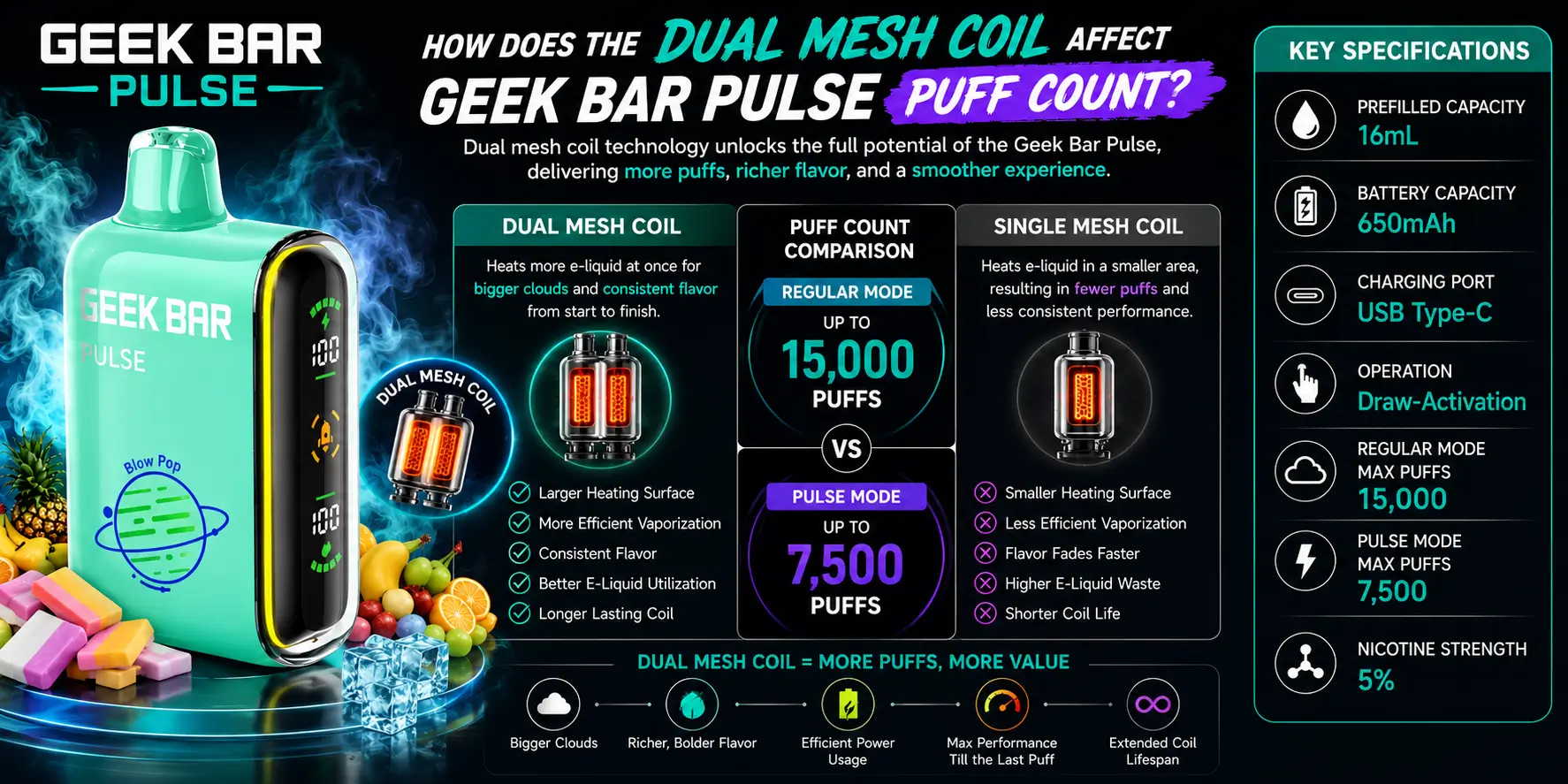
The dual mesh coil is a big part of why Pulse devices post puff ratings in the 25K–50K range. Efficient vaporization means less e-liquid wasted per draw, which stretches the tank across more total puffs.
Regular Mode fires the coil at lower power to conserve e-liquid, which is how devices reach their highest advertised puff count. Pulse Mode pushes more current through the same two mesh strips for a stronger hit, which uses roughly double the e-liquid per puff and cuts the rated count close to in half.
For the full breakdown of how these numbers are calculated and what actually changes your real-world count, see our Geek Bar Pulse Puff Count guide.
Yes — running two mesh strips instead of one draws more current per puff, so battery life is tied directly to how often you fire the coil, not just how much e-liquid is left.
This is why Geek Bar Pulse X devices ship with rechargeable batteries rather than a single fixed charge. The e-liquid tank is large enough that the battery would run out long before the juice does if it weren't rechargeable via USB-C throughout the device's life.
Heavier use, longer draws, and constant Pulse Mode firing all pull more from the battery per session, meaning you'll need to top up more frequently than with a single-coil device pulling less current. Our Geek Bar Pulse X Battery Life review covers realistic runtime numbers in detail.
For someone averaging 200–300 puffs a day, a dual-mesh Pulse device typically lasts anywhere from a few weeks to a couple of months, depending on the puff rating and which firing mode gets used most.
The coil itself doesn't wear out the way older single-wire coils sometimes did mid-tank — it's built to run for the full life of the e-liquid. So in practice, "how long it lasts" comes down to tank size, draw habits, and mode choice rather than coil degradation.
Our full How Long Does Geek Bar Pulse Last guide walks through the math for every current puff rating.
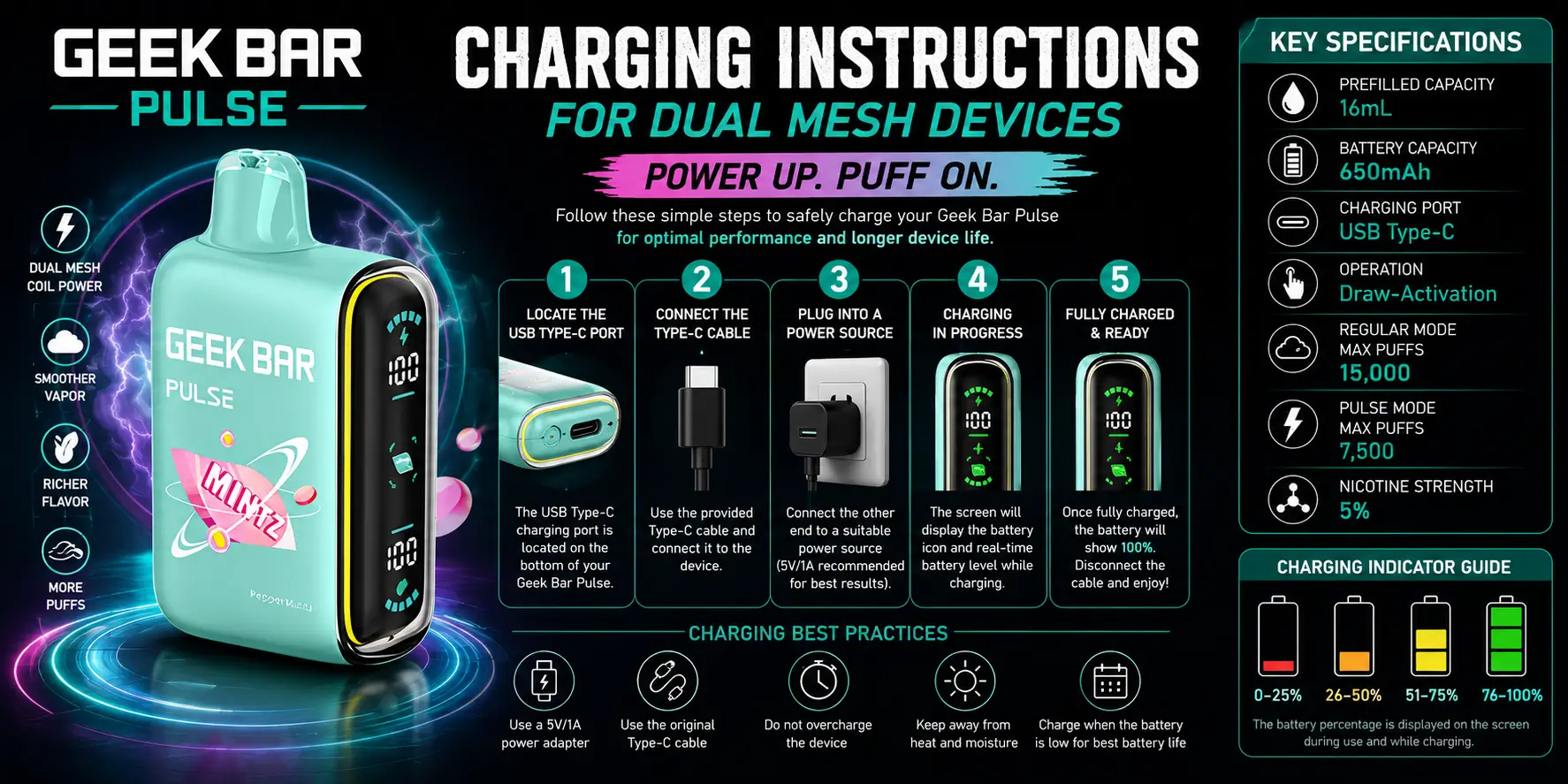
Charge fully before first use, then top up via USB-C whenever the battery indicator gets low — that's the entire routine, since dual mesh coils don't need any special charging behavior beyond what any rechargeable Pulse device requires.
Because the coil pulls more current than a single-mesh setup, letting the battery run all the way to zero repeatedly can shorten its overall lifespan faster than keeping it topped up. Charging in shorter, more frequent sessions tends to be gentler on the cell.
For the full step-by-step, including what each LED charging state means, check our Geek Bar Pulse Charging Instructions page.
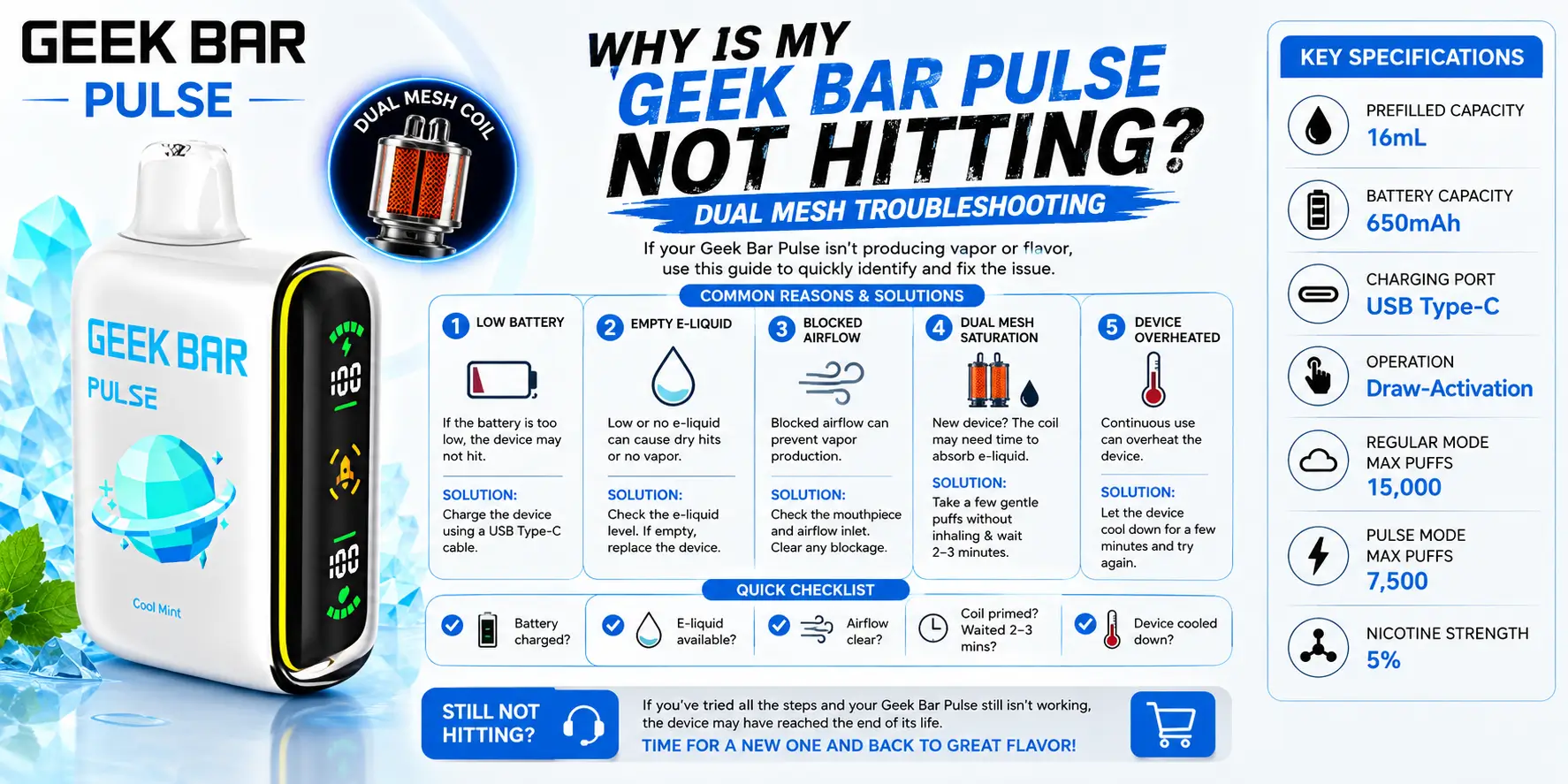
A dual mesh coil that isn't hitting is usually a wicking or airflow issue, not a coil failure — the two-strip design is durable enough that a bad puff is rarely the coil itself giving out.
Common causes include an air bubble trapped near the coil, holding the device sideways or upside-down before use, or a dead battery that can't push enough current through both mesh strips to fire properly.
Letting a new device sit upright for a few minutes before the first puff gives the cotton time to fully saturate, which solves a large share of "not hitting" complaints on dual mesh devices. For every other cause and fix, see our Geek Bar Pulse Not Hitting troubleshooting guide.
The LED screen on dual-mesh Pulse devices tracks two things that matter most for coil performance: remaining battery and remaining e-liquid — both of which directly affect how well the coil fires.
Low battery readings are the clearest early warning that the coil won't be getting enough current for a full, even hit. Watching the screen instead of vaping until the device just stops is the easiest way to avoid a dead-battery "not hitting" moment mid-day.
For a full breakdown of every icon and number on the display, see our Geek Bar Pulse Screen Explained guide.
For most vapers comparing it to older single-coil disposables, yes — the flavor accuracy, denser vapor, and steadier performance late in the tank are noticeable improvements, not marketing exaggeration.
It's worth knowing the broader context too: disposable devices now make up close to half of the global e-cigarette and vape market, a share that's grown quickly as coil technology like dual mesh has improved (Grand View Research). Better coils are a real driver of why disposables have closed the performance gap with refillable mods.
The trade-off is battery drain and e-liquid consumption — a dual mesh coil simply asks more of both. If you're someone who vapes heavily in Pulse Mode all day, expect to charge more often and empty the tank faster than the rated puff count might suggest.
One more thing worth remembering regardless of coil type: federal law sets the minimum legal purchase age for any nicotine vapor product at 21 nationwide, and every Pulse device carries a California Prop 65 warning noting nicotine's link to reproductive harm — standard across the disposable category, not unique to dual mesh models.
1. What makes a dual mesh coil different from a single mesh coil?
A dual mesh coil uses two heating strips firing at once instead of one, which roughly doubles the surface area in contact with e-liquid. That extra surface area produces richer flavor, denser vapor, and more even heat distribution, which helps prevent the burnt-tasting hot spots that single coils are prone to, especially as the tank runs low.
2. Does the dual mesh coil affect Geek Bar Pulse battery life?
Yes. Firing two mesh strips instead of one pulls more current per puff, so the battery drains faster than it would on a single-coil device, particularly in Pulse Mode. This is part of why current Pulse devices use rechargeable USB-C batteries rather than a single fixed charge that's expected to last the whole tank.
3. Can a dual mesh coil go bad or stop hitting?
The coil itself rarely fails outright, since the design is built to last the full life of the e-liquid tank. Most "not hitting" issues trace back to trapped air bubbles, incomplete cotton saturation on a brand-new device, or a battery too low to push current through both mesh strips properly.
4. Does the dual mesh coil change how long a Geek Bar Pulse lasts?
It contributes to it. Efficient vaporization means less e-liquid wasted per draw, which supports the higher puff ratings seen across the Pulse lineup. Actual device lifespan still depends heavily on daily puff volume, draw length, and whether you're running Regular Mode or Pulse Mode most often.
5. Is a dual mesh coil better for flavor than a single mesh coil?
Generally yes. The larger combined surface area extracts more nuance from e-liquid, which is why flavor-focused vapers tend to prefer dual mesh setups. The coil also holds its flavor accuracy longer into the tank's life, whereas single coils typically start tasting flatter or slightly burnt in the final stretch.
Geek Bar Pulse — Disposable Vape
🛒 Where to Buy Online
Choose from our verified partner stores — all carry 100% authentic Geek Bar Pulse products sourced directly from official US distributors.


Twelve Tribes
Wide Selection • Best Prices

Raven Route
Fast Delivery • All Flavors


Zippyzz
Quick Shipping • Great Deals
🔒 All partner stores are verified, age-gated, and ship only to legal US states. Purchases are made directly with the retailer — not geekbarpulse.com.
⚠️ Must be 21+ to purchase.